트레드밀의 진화: 단순 충격 흡수(Cushioning)를 넘어선 ‘능동형 안전(Active Safety)’ 시대
최근 시니어 타운과 주야간보호센터를 중심으로 ‘액티브 시니어’를 위한 전문 피트니스 수요가 급증하면서, 초저속 제어와 낙상 방지 기능을 갖춘 재활 특화 보행 기구의 도입이 활발해지고 있습니다. (참고 기사: 미국 국립노화협의회의 스마트 재활 기구 관련 보도 https://www.ncoa.org/article/evidence-based-programs-gaitactive/ 및 모터 부하가 정상적으로 작동하는 표준 체중 지지 방식의 바이오피드백 보행 훈련 도입 관련 미국 의료계 보도 https://smti.co/blog-insights/gait-training-gives-pt-practice-a-clinical-and-competitive-advantage)
뇌졸중, 파킨슨병 등 노인성 질환의 보행 훈련이 표준 치료로 자리 잡으면서, 트레드밀은 단순한 체력 단련을 넘어 시니어 재활과 웰니스의 핵심 기기로 진화했습니다. 그러나 실제 사용 현장에서는 “푹신한 최고급 러닝머신을 써도 무릎이 계속 아프고, 낙상이 늘 불안하다”는 근본적인 페인포인트가 반복됩니다.
미국 응급실 내원 환자 데이터를 분석한 역학 연구에 따르면, 65세 이상의 고령 사용자는 러닝머신 등 가정용 운동 기구에서 부상을 당할 경우 일반인(젊은 층) 대비 병원 입원 및 중증 이송률이 유의미하게 높은 것으로 나타났습니다. 특히 기계식 벨트 위에서의 미세한 미끄러짐은 뼈와 근력이 약해진 시니어에게 치명적인 골절로 직결됩니다. (근거 자료: Injury Prevention, 2014 – https://www.ncbi.nlm.nih.gov/pmc/articles/PMC4306571/)
현재 대부분의 피트니스 기기 제조사들은 충격 흡수 젤 패드나 물리적인 비상 키와 같은 ‘수동적 안전(Passive Safety)’ 장치에만 매달리고 있습니다. 하지만 이러한 하드웨어적 접근은 부상의 근본 원인인 누적되는 ‘자세 불균형’과 ‘잘못된 보행 패턴’을 사용자 스스로 인지하게 돕는 데는 명백한 한계를 가지고 있습니다.
수동적 안전(Passive Safety)의 바이오메카닉적 한계
생체역학적 보행 분석에서는, 일정한 속도로 움직이는 기계식 벨트 위를 걷는 것이 고령 사용자에게 지면 보행과는 다른 보행 패턴을 유도하는 것으로 보고됩니다. 건강한 고령자를 대상으로 지면과 트레드밀 보행을 같은 속도에서 비교한 연구에서, 트레드밀 보행은 더 짧은 보폭, 더 높은 케이던스(분당 걸음 수), 그리고 대부분의 관절 모멘트 감소와 연관됐습니다. (근거 자료: Watt et al., Clinical Biomechanics, 2010 – https://pubmed.ncbi.nlm.nih.gov/20347194/)
피로가 누적될수록 이러한 부자연스러운 보행은 결국 무릎과 고관절 모멘트의 비대칭적 부하로 이어질 수 있습니다. 기존의 푹신한 바닥판은 발을 디딜 때 발생하는 단순 수직 충격력만 일부 완화할 뿐, 비대칭 보행이나 자세 흔들림을 사용자가 실시간으로 확인할 수 있는 수단은 제공하지 않습니다.
업계에서는 이런 한계를 넘어서기 위해, 보행 데이터를 실시간으로 수집해 사용자에게 보여주는 ‘능동형 안전(Active Safety)’ 접근에 대한 관심이 커지고 있습니다. 실제로 시각적 피드백을 활용한 균형훈련은 지역사회 고령자 120명을 대상으로 한 무작위대조시험에서, 6개월 추적 기간 중 낙상률이 대조군 53.3%에서 개입군 33.3%로 유의하게 낮았습니다(p<0.05). (근거 자료: Li et al., PeerJ, 2018 – https://pmc.ncbi.nlm.nih.gov/articles/PMC5768172/) 이는 Elegaiter가 검증한 결과가 아니라, 사용자에게 시각적 피드백을 보여주는 접근 방식 자체에 대한 학계의 연구 동향을 보여주는 참고 자료입니다.
Elegaiter가 주목하는 지점
Full-Scope CRO로서 다년간 의약품 및 의료기기 임상시험 설계와 Real-World Data(RWD) 분석 노하우를 축적해 온 사이클룩스(CiKLux)는, 이러한 문제의식에서 출발해 엘리게이터(Elegaiter) 프로젝트를 개발했습니다. (https://www.ciklux.com)
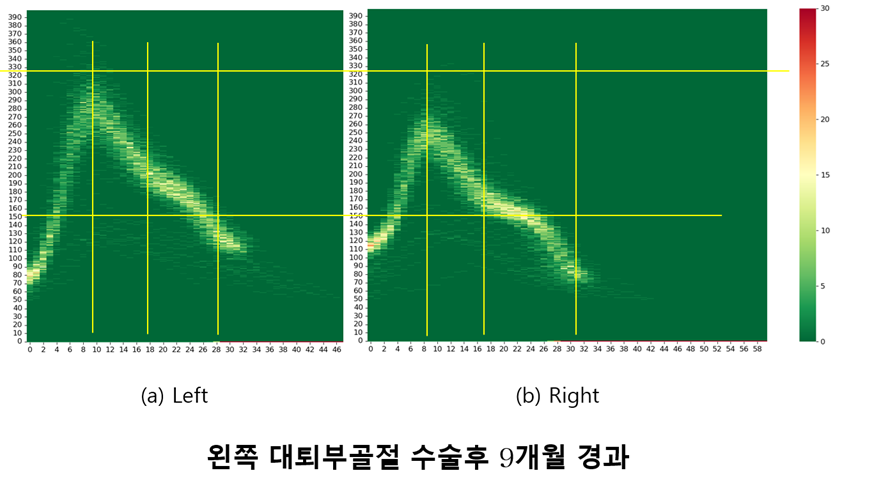
엘리게이터는 트레드밀 모터의 전력 소비 패턴 변화를 16.7ms(초당 60회 이상) 단위로 정밀하게 수집하여, 좌우 디딤의 밸런스와 보행 안정성 변화를 실시간 데이터로 시각화합니다. (https://www.elegaiter.com) 사용자는 이 데이터를 통해 자신의 보행 균형이 평소와 달라지거나 특정 방향으로 하중이 쏠리는 흐름을 스스로 확인하고, 필요하다면 트레이너나 의료진과 이 변화를 공유해 대응 방법을 상의할 수 있습니다.
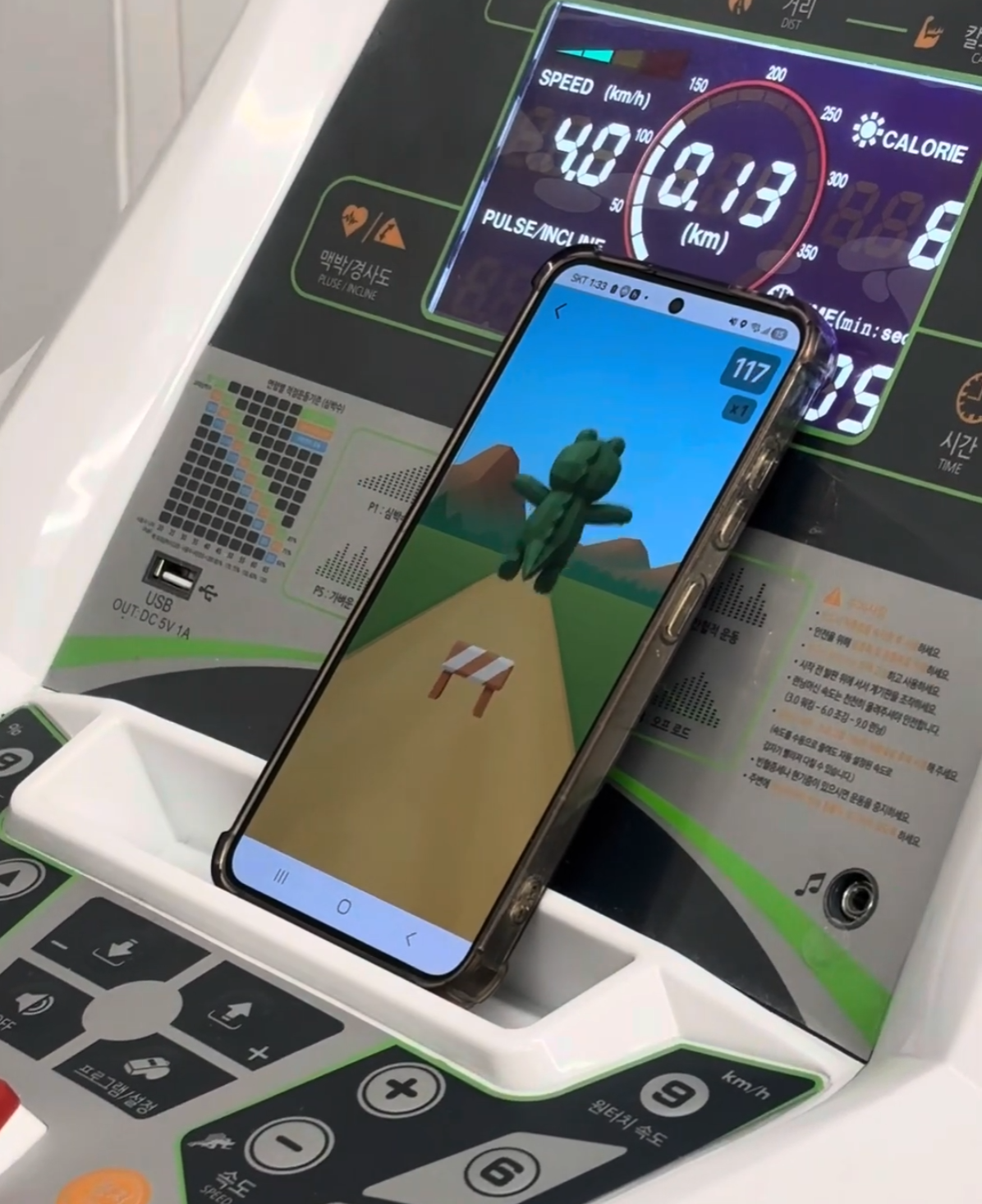
나아가, 시니어를 포함한 모든 사용자가 자신의 보행 상태를 직관적으로 인지할 수 있도록 실시간 상호작용(인터랙티브) 환경을 구축했습니다. 사용자가 천천히 걸을 때는 화면 속의 악어 캐릭터가 땅을 걷고, 속도를 높여 달리기 시작하면 악어가 하늘을 나는 등 즉각적인 시각적 피드백을 제공하여, 단조로운 재활 훈련의 몰입도를 높이고 자발적인 자세 교정을 유도합니다.
시니어 웰니스 기기가 나아가야 할 방향은 단순히 ‘바닥이 얼마나 푹신한가’가 아니라, ‘시스템이 사용자의 걸음을 얼마나 실시간으로 보여주고, 사용자 스스로 변화를 인지하게 돕는가’에 있다고 생각합니다.
※ 본 제품(Elegaiter)은 의료기기가 아니며, 질병의 진단·치료·치유 또는 예방을 목적으로 하지 않습니다. 본문에 인용된 외부 연구는 관련 분야의 학술 동향을 소개하기 위한 것으로, Elegaiter 제품 자체의 임상적 효과를 검증한 자료가 아닙니다. 제공된 데이터는 참고용이며 전문적인 의학적 조언을 대체할 수 없습니다.
※ 정정 안내(2026-09-02): 초기 게시본에서 인용한 PeerJ(2018)·REACT Trial 논문이 본문 주장을 원문 그대로 뒷받침하지 않아, 해당 두 문단의 인용을 각각 Watt et al.(2010)·Li et al.(2018)로 교체하고 표현을 근거 수준에 맞게 수정했습니다.
CiKLux #Elegaiter #DigitalHealthcare #Rehabilitation #GaitAnalysis #SeniorCare
(English Version)
The Evolution of Treadmills: Beyond Cushioning to ‘Active Safety’
As specialized rehabilitation gait trainers with low-speed control and fall-prevention features are increasingly adopted around daycare and senior centers, senior fitness needs are shifting toward more active, data-informed approaches. (Ref: NCOA [1], SMTI [2])
While treadmill-based gait training has become a standard component of stroke and Parkinson’s rehabilitation, a persistent pain point remains in the field: “Even on cushioned decks, users still experience joint discomfort and remain anxious about falling.”
According to an analysis of US emergency room data, older adults injured on home exercise equipment face significantly higher rates of hospitalization and severe outcomes compared to younger users. Microscopic slips on moving belts can be especially consequential for seniors with reduced bone density and muscle strength. (Ref: Injury Prevention Study, 2014 [3])
Most manufacturers today rely primarily on “Passive Safety” measures — cushioned gel decks, physical emergency stop keys. While useful, these hardware-based approaches have a clear limitation: they don’t help users notice the accumulated postural asymmetry or gait pattern issues that are often the root cause of injury risk.
The Biomechanical Limits of Passive Safety
Biomechanical gait research suggests that walking on a motorized belt moving at a constant speed can prompt older adults to walk differently than they do overground. In a study of healthy older adults that compared overground and treadmill walking at matched speeds, treadmill walking was associated with a shorter stride length, higher cadence, and reduced joint moments. (Ref: Watt et al., Clinical Biomechanics, 2010 [4])
As fatigue accumulates, this altered gait pattern may contribute to asymmetric loading around the knee and hip joints. Cushioned decks primarily absorb vertical impact force at footstrike; they don’t, by themselves, give users a way to observe asymmetric gait or postural sway in real time.
This has driven growing interest across the industry in an “Active Safety” approach — collecting gait data in real time and presenting it back to the user. In a randomized controlled trial of 120 community-dwelling older adults, visual-feedback-based balance training was associated with a significantly lower fall rate over 6 months of follow-up (33.3% in the intervention group versus 53.3% in controls, p<0.05). (Ref: Li et al., PeerJ, 2018 [5]) This points to a broader academic research direction around showing users visual feedback — it is not a finding that has been validated for the Elegaiter product itself.
Where Elegaiter Fits In
CiKLux, a Full-Scope CRO with years of accumulated expertise in clinical trial design and Real-World Data (RWD) analysis for pharmaceuticals and medical devices, developed the Elegaiter project starting from this same set of questions. (Ref: CiKLux [6])
Elegaiter measures changes in a treadmill motor’s power consumption pattern at 16.7ms intervals (60+ times per second), turning that signal into real-time visualizations of left-right balance and gait stability. (Ref: Elegaiter [7]) This lets users see for themselves when their gait balance shifts from their usual pattern, or when load appears to concentrate on one side — information they can then choose to share with a trainer or clinician if they want to discuss it further.
We’ve also built an interactive environment to help users intuitively notice their own gait in the moment. When a user walks slowly, an on-screen crocodile character walks along the ground; when they pick up the pace and start running, the crocodile takes flight. This kind of immediate visual feedback is designed to make otherwise repetitive rehab exercises more engaging and to encourage users to adjust their own posture.
We believe the future of senior wellness devices isn’t about how soft the deck is — it’s about how clearly a system can show users their own steps in real time, and how well it helps them notice change for themselves.
※ This product (Elegaiter) is not a medical device and is not intended to diagnose, treat, cure, or prevent any disease. The external studies referenced above are cited to illustrate broader academic and industry trends; they are not evidence that has validated the clinical effects of the Elegaiter product itself. Data provided is for reference purposes only and does not substitute for professional medical advice.
※ Correction (2026-09-02): The originally published version cited a PeerJ (2018) dataset paper and the REACT Trial in support of claims they did not directly substantiate; those two citations have been replaced with Watt et al. (2010) and Li et al. (2018), and the surrounding wording adjusted to match what the sources support.
References:
[1] NCOA Programs: https://www.ncoa.org/article/evidence-based-programs-gaitactive/
[2] SMTI Case Study: https://smti.co/blog-insights/gait-training-gives-pt-practice-a-clinical-and-competitive-advantage
[3] Injury Study (2014): https://www.ncbi.nlm.nih.gov/pmc/articles/PMC4306571/
[4] Watt et al., Clinical Biomechanics (2010): https://pubmed.ncbi.nlm.nih.gov/20347194/
[5] Li et al., PeerJ (2018): https://pmc.ncbi.nlm.nih.gov/articles/PMC5768172/
[6] CiKLux Website: https://www.ciklux.com
[7] Elegaiter Website: https://www.elegaiter.com