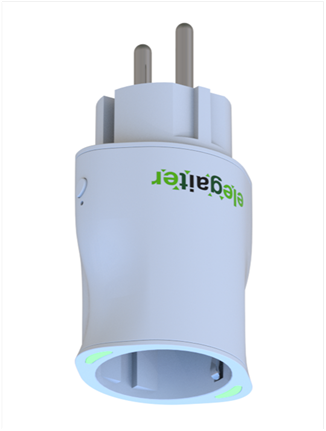
What if the monotonous walking and running exercise on a treadmill at home or in a fitness center could instantly transform into an interactive game stage that responds to your movements, and upon completion, the precision gait analysis results are immediately visualized?
CiKLux (https://www.ciklux.com), a contract research organization (CRO) specializing in clinical trial design and project management, is bringing this future closer by developing Elegaiter (https://www.elegaiter.com), a non-invasive gait monitoring system equipped with treadmill motor current analysis technology. Using already installed treadmills, Elegaiter’s technology provides two core values that are related but clearly distinct: ‘Real-Time Interaction Service’ and ‘Quantitative Gait Analysis Service.’
1. Key Data Analyzed by Elegaiter in Real-Time
Elegaiter captures the electrical current waveform of the treadmill motor at high speed, without attaching any sensors to the user’s body (non-contact), and calculates the following information in real time:
* High-Resolution Real-Time Cadence: Instantly tracks the walking speed (steps per minute) as the user’s foot contacts the belt within a tight temporal resolution of 20ms (sampling 50 to 60 times per second).
* Dynamic Movement Pattern Identification: By comparing the current load pattern changes of the footfalls with machine learning models, the user’s dynamic state and gait errors, such as walking (Walk), running (Run), or asymmetric gait (Limping), are identified in real time.
* Gait Time Variability: Continuous measurement of gait instability is conducted by tracking temporal differences in each step and micro-deviations in left-right symmetry (Asymmetry) in real time.
Elegaiter is based on this data pipeline to complete two business services with different purposes and values.
2. Key Strengths in the Aspect of Real-Time Interaction
The rich real-time gait data collected by Elegaiter functions as a powerful ‘input modality’ when combined with digital content, offering a new fitness experience. The ‘Real-Time Interaction Service’ is a B2C and fitness-targeted service that maximizes content control and user engagement at the moment the exercise occurs (Live).
* Function Extension to Game Controller: The user’s gait status itself becomes a control signal for the game. For example, walking tempo (cadence) is converted into the speed of the in-game character, direction is controlled by left-right balance shifts, and specific patterns like asymmetric gait (Limping) are also utilized as content control inputs.
* Inducement of Specific Movement Patterns and Actions: The digitalization of physical gait transforms the interacting content into more than just a game; by presenting visual or auditory obstacles or target beats within the content, it nudges users to naturally increase walking speed or correct left-right alignment. In other words, in the process of immersing themselves to clear the game, users naturally perform specific movement patterns that have corrective or therapeutic effects.
* Providing Engagement for Sustained Long-Term Exercise: Running games (Exer-gaming) linked with visual biofeedback completely eliminate the boredom of repetitive exercise, helping users sustain high-intensity cardiovascular workouts for a long time without perceiving it [1][2].
3. Key Strengths as a Quantitative Analysis (Analytics) Tool
Elegaiter consolidates the vast biomechanical data accumulated during content enjoyment without missing any, delivering highly reliable ‘Quantitative Gait Analysis Reports.’
* Quantitative Exercise Evaluation Based on Accumulated Data: It performs cumulative analysis of the footstep data generated while the user enjoys the game. It quantifies neuromuscular fatigue accumulation patterns and asymmetric joint load changes over exercise duration, which are difficult to detect through temporary measurements, using graphs and indicators. These biomechanical visualization materials directly translate into core retention strategies for fitness centers, increasing member trust and driving long-term motivation.
* Longitudinal Tracking of Wellness and Clinical Indicators: Through the accumulated data factory on a weekly and monthly basis, users’ gait symmetry improvement and gait variability stabilization trends can be captured at a glance. This serves as a powerful clinical evidence tool for senior care facilities to preemptively screen individuals at high risk of falls, or for rehabilitation centers to objectively demonstrate the progress of gait recovery.
* Overcoming the Limits of Non-Invasive Data Collection: Since it is collected on a daily basis in a natural everyday state (Real-World Environment) without any sensory irritation or consciousness of being measured, it represents the actual life gait status with maximized accuracy and reliability compared to data measured artificially in traditional laboratory settings.
[1] K. Kaźmierczak, A. Wareńczak-Pawlicka, M. Miedzyblocki, P. Lisiński, “Effect of Treadmill Training with Visual Biofeedback on Selected Gait Parameters in Subacute Hemiparetic Stroke Patients”, International Journal of Environmental Research and Public Health, 16925, 2022 (PMID 36554805)
[2] S. H. Schless, G. Sorek, I. Schurr, E. Beretta, E. Diella, E. Biffi, “Effectiveness of treadmill-based virtual-reality biofeedback training to improve gait function in children and adolescents with congenital and acquired brain injury”, Scientific Reports, 2025 (PMID 41372400)
답글 남기기